01
PI Planning
Prepared and facilitated Program Increment planning events.
Case study • Enterprise delivery
Turning six teams into one coordinated release train.
Coordinated delivery for a cloud migration supporting a platform processing more than 1.2 billion emails every month.
My evolution
As the organization adopted SAFe, my responsibilities expanded from leading a single team to coordinating planning and delivery across the Agile Release Train.
The challenge
PI Planning created alignment. Weekly Scrum of Scrums sustained it. My role was turning dozens of cross-team dependencies into one coordinated execution plan.
01
Features often depended on work being completed across multiple teams before delivery could move forward.
02
Every Program Increment required coordinated planning, sequencing, and commitment across the Release Train.
03
Weekly Scrum of Scrums surfaced blockers, resolved dependencies, and kept delivery on track throughout execution.
What I owned
01
Prepared and facilitated Program Increment planning events.
02
Maintained weekly alignment across teams while surfacing blockers and dependencies.
03
Managed sequencing across multiple teams.
04
Identified, tracked, and resolved cross-team dependencies.
05
Translated planning outputs into executable Jira plans.
06
Maintained shared visibility across leadership and delivery teams.
From planning to execution
Planning was not the end goal. Alignment throughout execution kept six teams moving together.
01
Planning Inputs
Requirements, priorities, team objectives
02
PI Planning
Shared objectives and commitments
03
Integrated Release Plan
Cross-team sequencing and dependencies
04
Executable Roadmap
Coordinated delivery plan
05
Weekly Execution
Scrum of Scrums and ongoing coordination
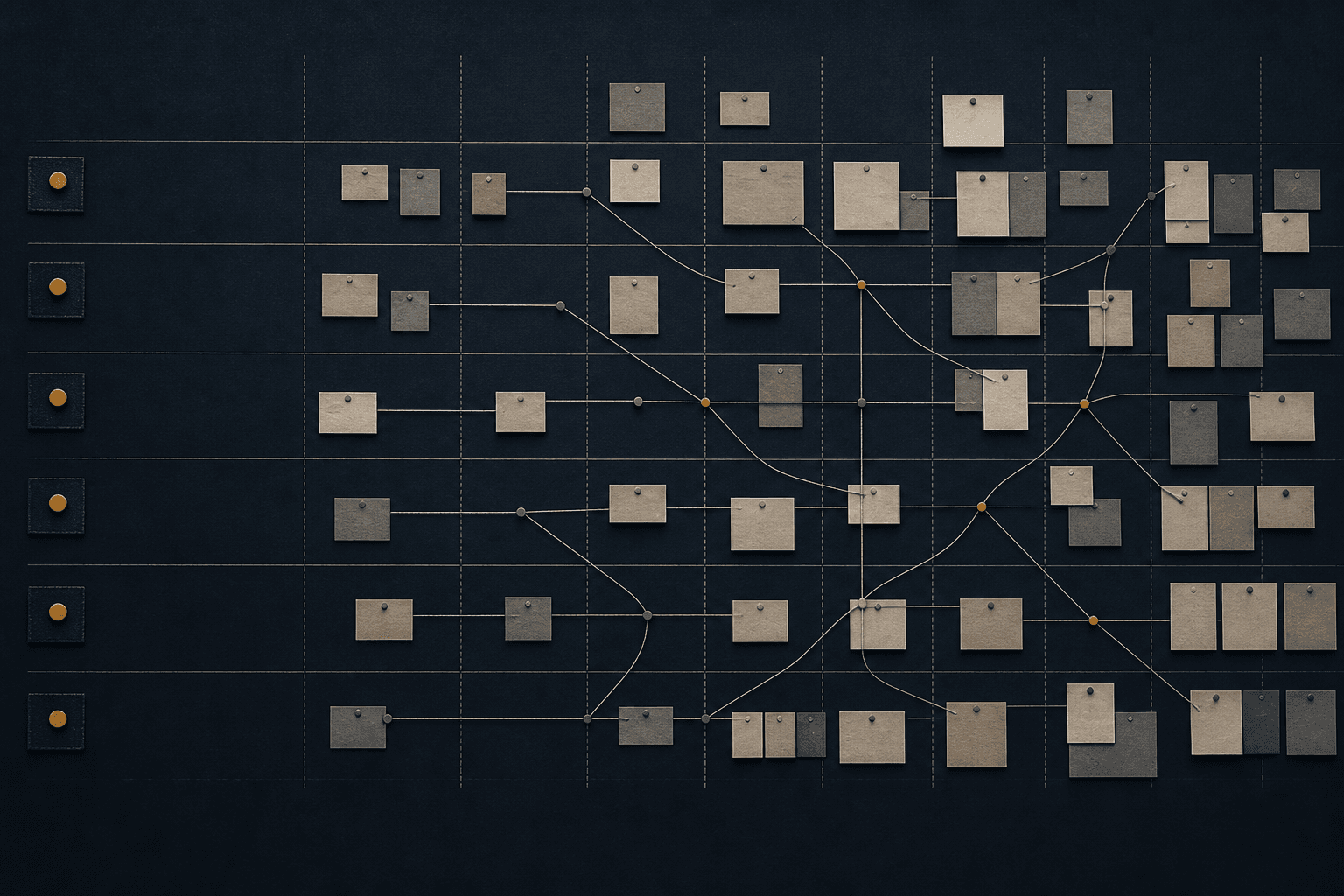
Turning six plans into one delivery plan
Independent planning lanes
Integrated release plan
Shared sequencing, dependencies, and priorities
Cross-team conflicts identified before execution
Every team worked toward the same increment goals
One coordinated roadmap replaced six disconnected plans
The real deliverable
01
Created a planning model that kept six teams moving toward the same objectives.
02
Turned complex dependencies into an executable delivery plan.
03
Built visibility and coordination that reduced uncertainty throughout the migration.
“The migration was the initiative. Building a repeatable planning and coordination system that kept six teams aligned was the lasting result.”